
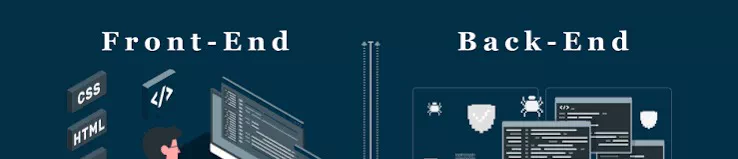

Frontend vs backend, in one line: frontend development is everything you see and click on a website, and backend development is everything that runs behind it. Frontend developers build layouts, buttons, menus and forms using HTML, CSS and JavaScript. Backend developers build the servers, databases and logic that store data and handle requests, using languages like Java, Python, PHP or JavaScript through Node.js.
If you're moving into tech from another field, the useful question isn't which one is "better". It's which one fits how you like to work, and which one your current skills give you a head start in. If you're still deciding whether tech is right for you at all, start with our guide to a career change into IT.
What is frontend development?
Frontend development is building the part of a website or app that people see and use. Frontend developers turn designs into working pages, make them look right on phones and desktops, and connect them to data from the backend. The core tools are HTML for structure, CSS for styling and JavaScript for interaction.
On a normal day, a frontend developer might:
• Build page layouts and interface components from a designer's mockups
• Make pages work on every screen size, from phones to wide monitors
• Add interactions like forms, menus, filters and animations
• Pull data from backend APIs and display it on the page
• Fix bugs that only show up in certain browsers
• Improve page speed and accessibility
Frontend technologies to know

What is backend development?
Backend development is building the server-side systems that make a website work: storing data, checking logins, processing orders and sending the right information back to the user. Backend developers write application logic, design databases, build APIs and keep the system secure. Common languages include Java, Python, PHP, C# and JavaScript (Node.js).
When you log in to an account, submit a form or buy something online, the backend checks the request, talks to the database and sends back a response. You never see it, but nothing works without it.
On a normal day, a backend developer might:
• Write the server-side logic behind features
• Design and manage databases, either SQL (MySQL, PostgreSQL) or NoSQL (MongoDB)
• Build and maintain APIs that the frontend and other systems use
• Handle logins, user roles and permissions
• Protect user data and fix security issues
• Find and fix slow queries and performance problems
Backend technologies to know

Frontend vs backend development: key differences
Both sides build the same product, but the daily work feels very different.

How do frontend and backend work together?
Frontend and backend talk through APIs. The frontend sends a request, such as "log this user in", and the backend checks it, works with the database and sends a response. The frontend then shows the result. Neither side works on its own, which is why most developers learn the basics of the other side too.
Here's what happens when you log in to a website:
1. You type your email and password into the login form (frontend).
2. The frontend sends those details to the backend through an API.
3. The backend checks them against the user records in the database.
4. The backend sends back a response: success, or an error message.
5. The frontend shows you your account page or the error.
What is full stack development?
Full stack development means working on both the frontend and the backend. A full stack developer can build the interface, write the server logic and set up the database. A common example stack is React for the frontend, Spring Boot or Node.js for the backend, and MySQL or PostgreSQL for the database.
Full stack is a popular goal, but if you're changing careers, don't try to learn everything at once. Get comfortable on one side, build a few projects, then add the other. You'll learn faster and have something to show sooner.
Frontend or backend: which is better for a career change?
Choose frontend if you like visual work and seeing results instantly. Choose backend if you prefer logic, data and solving problems behind the scenes. Your previous career can help you decide, because some transferable skills carry over more naturally to one side than the other.
It also helps to understand what software engineers do day to day before you commit to either path.
Frontend may suit you if
• You enjoy design, layout and how things look
• You like seeing the result of your work straight away
• You notice when something is confusing to use, and want to fix it
• Your background is in something like graphic design, marketing, content or customer support, where you think about the end user every day
Backend may suit you if
• You enjoy puzzles and working out why something is broken
• You're comfortable with data, spreadsheets or step-by-step processes
• You'd rather build systems than polish visuals
• Your background is in something like finance, accounting, operations, data analysis or IT support
Try both before you commit
Give each side one weekend:
1. Frontend test: build a one-page personal site with HTML and CSS, then add one interactive element with JavaScript, like a contact form that checks the email field.
2. Backend test: build a small API in Python (Flask) or Node.js (Express) that saves a list of items to a database and returns them.
Pay attention to which one you kept going with after it got frustrating. That tells you more than any comparison article, including this one.
Is frontend easier to learn than backend?
Frontend is usually easier to start, because you see results in the browser straight away. It doesn't stay simple, though: real frontend work involves JavaScript frameworks, state management and performance. Backend has a steeper start, since you need to understand databases, servers and how requests flow. Neither one is a shortcut into tech.
For pay and job outlook in the US, check the BLS Occupational Outlook Handbook pages for web developers and software developers
Skills you need for either path
Whichever side you pick, these basics come up in almost every job listing:
• Programming fundamentals: variables, loops, functions and data types
• Git and GitHub for version control
• How APIs work: requests, responses and JSON
• Basic database concepts
• Debugging and reading error messages calmly
• Writing clearly about your work in tickets, pull requests and documentation
• Working with designers, product managers and other developers
A small portfolio of real projects gives employers something concrete to look at, which matters when your work history is in a different field. When you apply, put those projects near the top of a career change resume and use our list of skills to put on your resume to describe what you can do.
Before you choose, talk to people who already do the job. On Lobox you can connect with frontend and backend developers and recruiters, and ask what their work really involves. A short conversation with a working developer will answer questions no tutorial covers.
Where to go from here
Pick one side, give it a few months of focused practice and build two or three projects you can explain in an interview. You can always add the other side later, and plenty of developers do. When you're ready to apply, start with these job search websites.
Planning your move into tech? Join Lobox to connect with developers, recruiters and companies hiring for frontend and backend roles.
FAQ
1.What is the difference between frontend and backend development?
Frontend development covers everything users see and interact with on a website, like layouts, buttons and forms. Backend development covers what happens behind the scenes: servers, databases and the logic that stores data and handles requests. Frontend mostly uses HTML, CSS and JavaScript, while backend uses languages such as Java, Python, PHP, C# or Node.js.
2. Should I learn frontend or backend first?
If you're new to coding, frontend is often the easier starting point because you can see your results in the browser right away. If you already enjoy working with data, logic or spreadsheets, starting with backend can make sense. Try a small project on each side for a weekend, then commit to the one you kept coming back to.
3. Can I switch from frontend to backend later?
Yes. Many developers move between the two, or grow into full stack roles over time. Programming basics, Git, APIs and debugging carry over to both sides. The main things you'd add when moving to backend are a server-side language, database design and security basics. Going the other way, you'd focus on HTML, CSS, JavaScript and a frontend framework.
4. Do frontend developers need to know databases?
Frontend developers don't usually manage databases directly, because the backend handles that. But understanding how data is structured and how APIs return it makes frontend work much easier. You'll understand why a request fails, what data you can ask for, and how to talk to backend developers when something on the page doesn't look right.
5. Is Java used for frontend or backend?
Java is mainly a backend language. It's widely used for server-side systems, often with the Spring Boot framework, especially in larger companies. Don't confuse it with JavaScript, which is a different language. JavaScript runs in the browser for frontend work and can also run on the server through Node.js, so it works on both sides.
6. Can I become a web developer without a degree?
A degree isn't required for every web development job, and some employers focus more on portfolios, coding tests and practical experience. Requirements vary by company and country, so read real job listings for the roles you want. If you don't have a degree, a few solid projects you can explain clearly matter even more.