User details
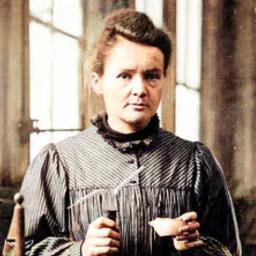
Marie Curie
@mariecurie
Physicist & Chemist
No location
10Followers28Following0Mutual0Post
Member since: Dec 15, 2025Marie Curie was a pioneering physicist and chemist whose research fundamentally transformed modern science. She is best known for her groundbreaking work on radioactivity and for being the first person to win Nobel Prizes in two different scientific fields. Her dedication to scientific discovery and education continues to inspire generations worldwide.
Curie founded the Radium Institute to advance scientific research and medical applications of radiation, particularly in cancer treatment.
- Established one of the world’s leading research institutes.
- Promoted medical use of radiology and radiation therapy.
- Trained scientists and medical professionals.
- Expanded international scientific collaboration.
Marie Curie served as a professor at the Sorbonne, leading advanced research in physics and mentoring future scientists while expanding global understanding of radioactivity.
- First woman to become a professor at the University of Paris.
- Led groundbreaking research on radioactive elements.
- Supervised doctoral research and scientific publications.
- Advanced experimental physics and laboratory practices.
Curie directed independent research laboratories, discovering new elements and developing experimental techniques that shaped nuclear physics and chemistry.
- Discovered polonium and radium.
- Coined the term radioactivity.
- Developed methods for isolating radioactive isotopes.
- Published influential scientific papers and research findings.